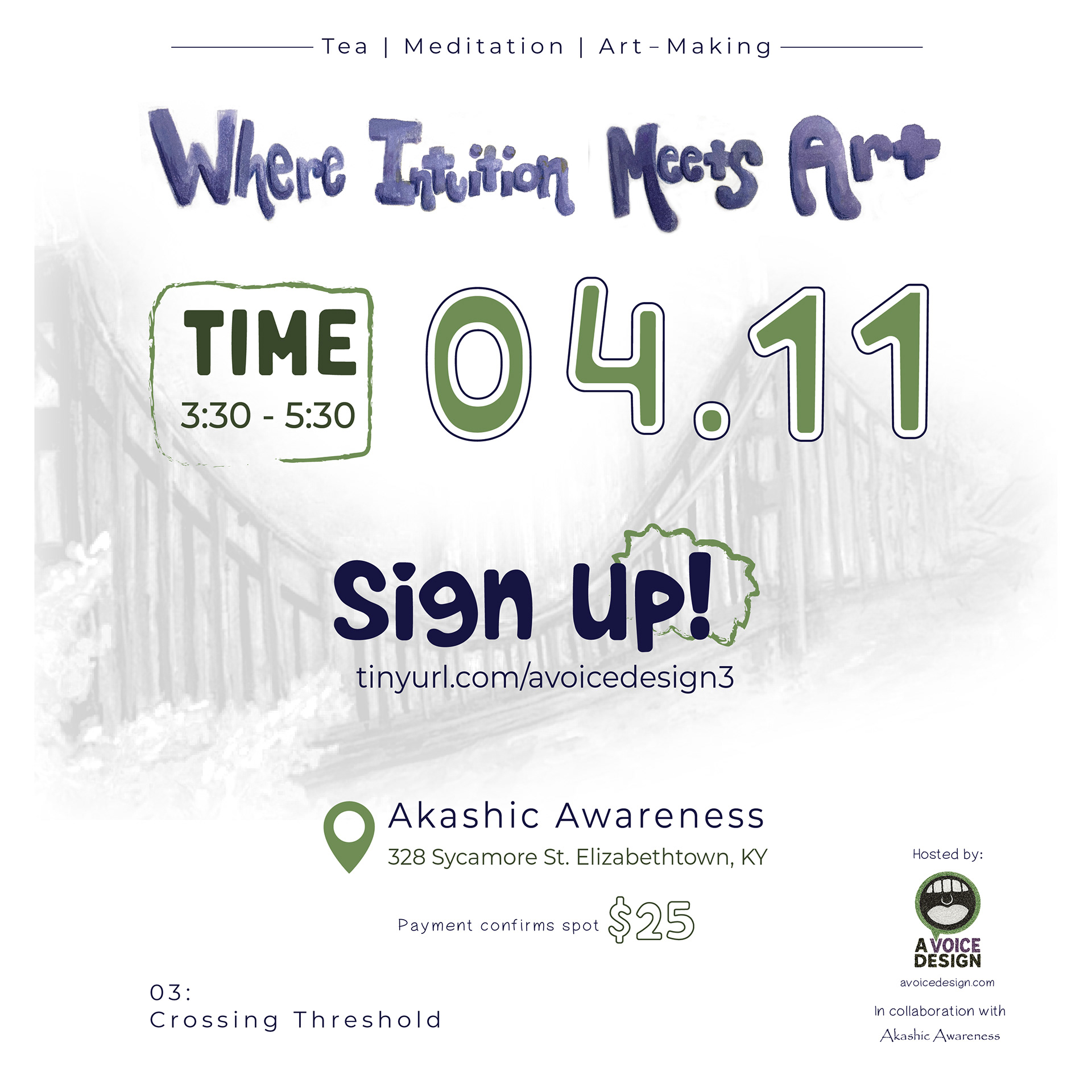
Where Intuition Meets Art
Where Intuition Meets Art is a community-based practice exploring the relationship of art-making, intuition, spirituality, and self-discovery.
The workshops invite participants to slow down, turn inward, and use creative expression as a way of making visible what is already known within the spirit, the subconscious.
Creation is a tool used to hear and see what may be sitting under the surface. Before we consciously understand why we reach for a particular color, make a certain mark, repeat a shape, or feel drawn toward a symbol, something within us may already be communicating. Whether participants understand that communication as intuition, spirituality, subconscious knowing, connection to a higher source, or simply the result of slowing down and paying attention, the creative process offers a tangible way to explore it.
These experiences are not about artistic skill or producing a “good” finished piece. They are about presence, about noticing. Through guided prompts, meditation, conversation, sensory experiences, and intuitive art-making, participants are encouraged to release the pressure to make something perfect, focusing on the journey rather than the destination.
The Practice
I believe we carry knowledge within us that we do not always have language for. Creative practice can provide another way of accessing that knowledge.
In Where Intuition Meets Art, participants are invited to pay attention to the choices and movements that arise naturally during the process: pressure in holding the tools, materials gravitated toward, feelings that surface. There is no single interpretation of these choices, the practice leaves room for all perspectives. What matters is the opportunity to pause, notice, and ask: What is this showing me?
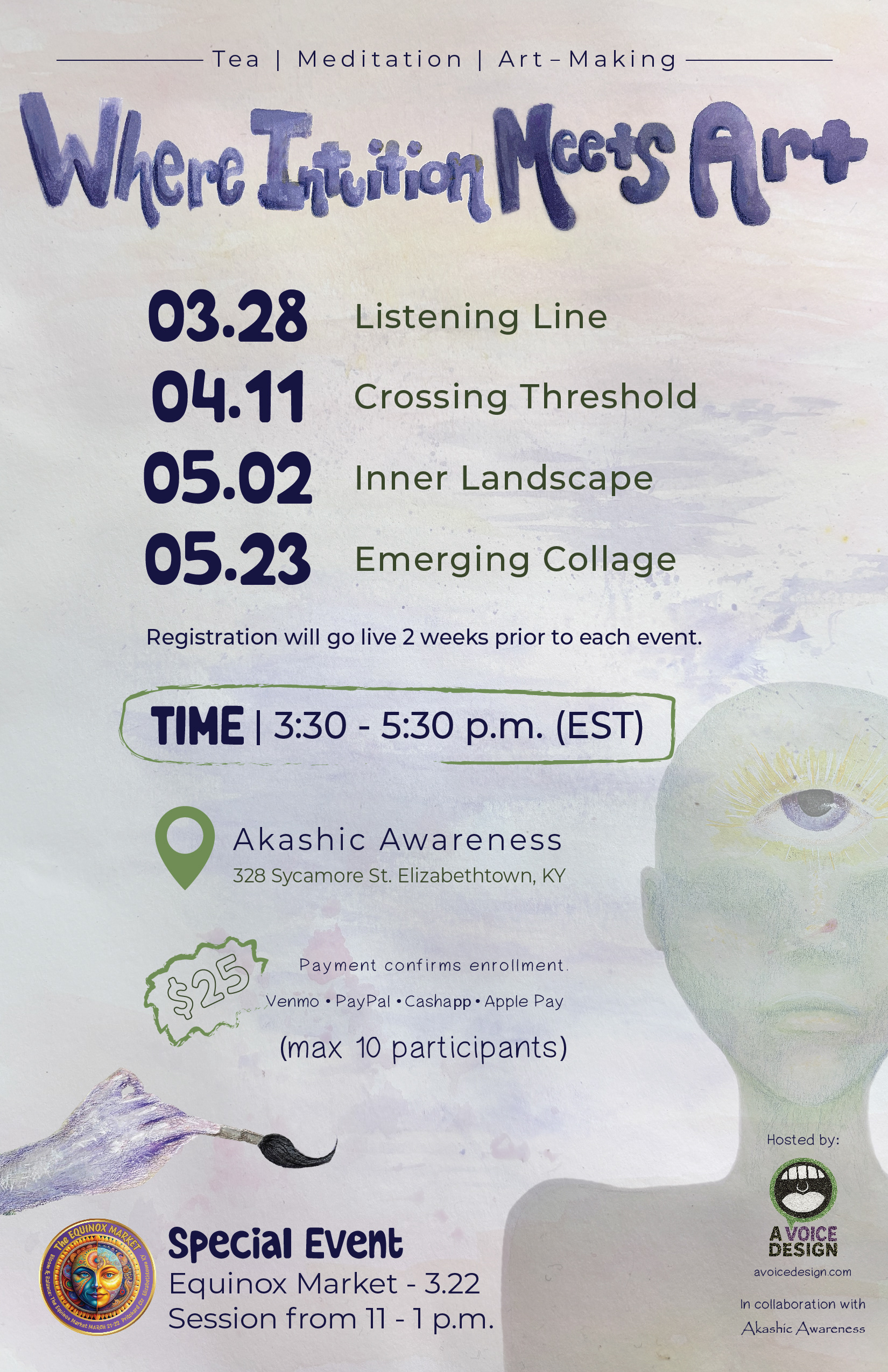
While Where Intuition Meets Art began as a group-based practice, I have also facilitated individual sessions tailored to each participant's existing relationship with art-making, reflection, and spirituality.
These one-on-one experiences allow the process to become more responsive. Rather than asking every participant to move through the same framework, I can meet someone where they are—adjusting prompts, pacing, materials, and conversation according to their needs and prior experience.
The intimacy of this format creates space to move more deeply into questions that may not surface as readily in a group setting. It also reinforces one of the central principles of the practice: there is no single way to access intuition, and no universal path toward creative self-discovery.
My role is not to interpret another person's imagery or tell them what their creative choices mean. Instead, I create the conditions for exploration and offer questions that allow participants to develop their own understanding.
I may ask: Why did you choose that color? What do you notice about this shape? What changed when you made that mark? What does this symbol mean to you? What happens if you don't change it?
The participant maintains authority of their own experience.
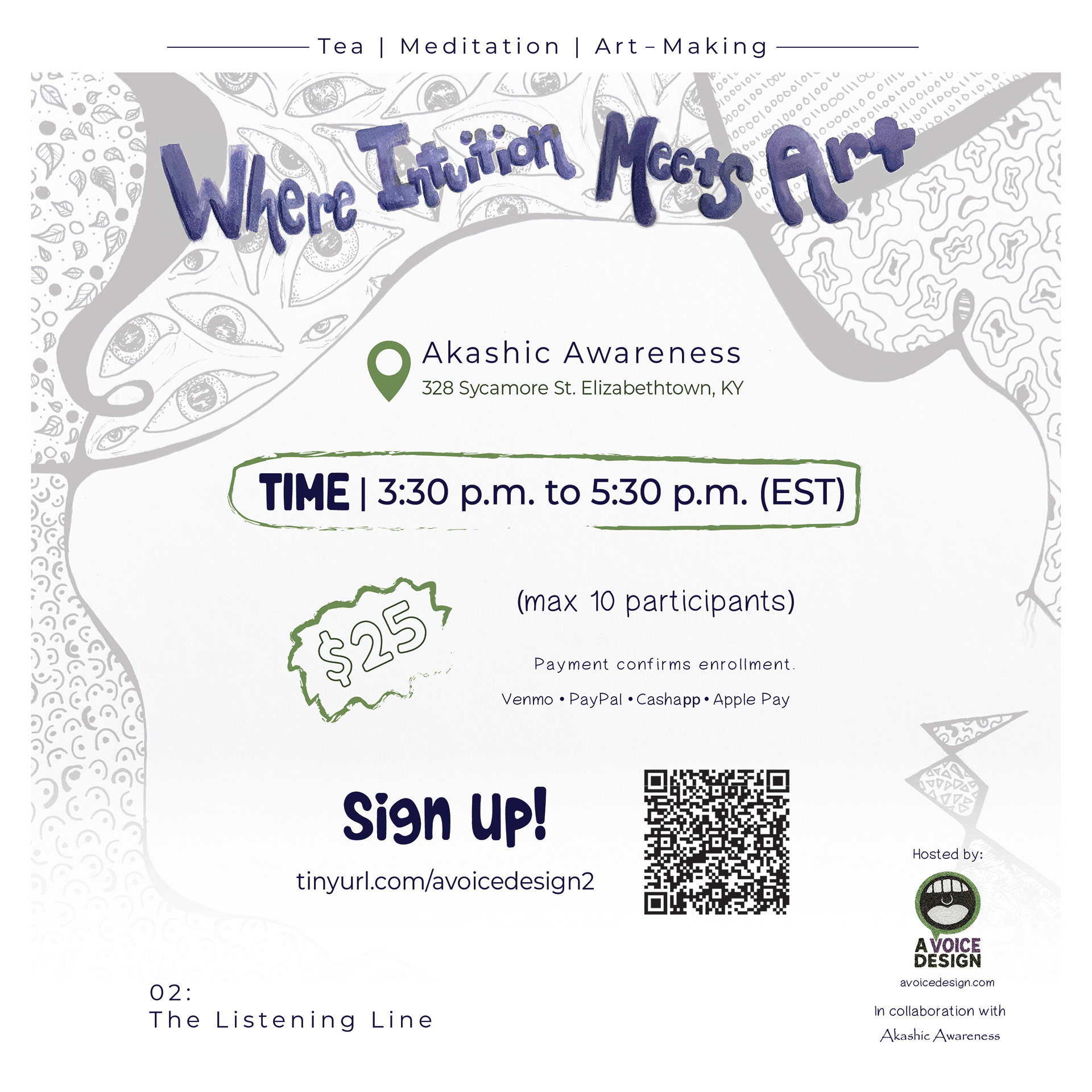
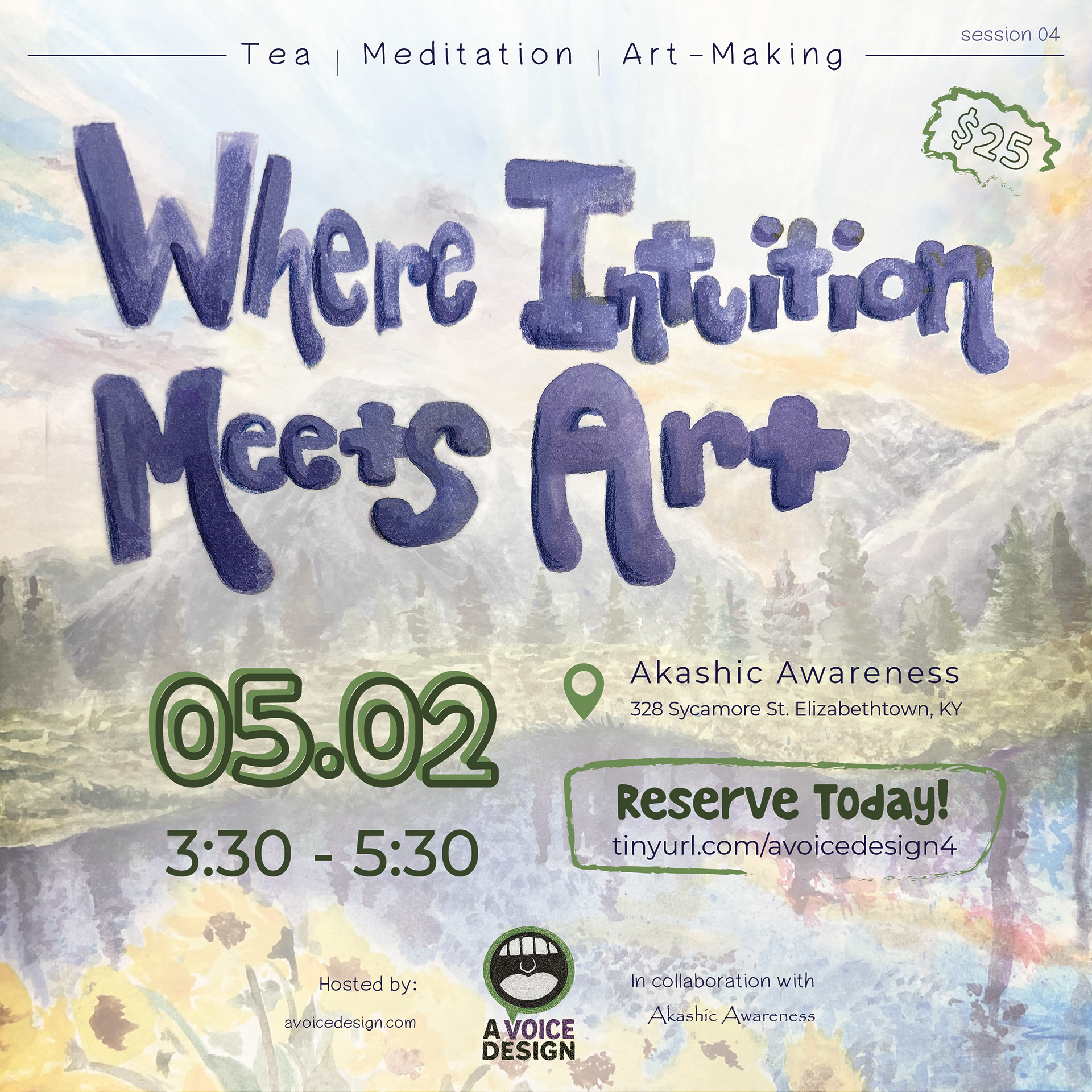
Where Intuition Meets Art grew from my belief that creativity is not reserved for artists. We are all capable of making meaning through color, shape, movement, symbol, sound, story, material.
Sometimes we create because we already know what we want to say. Other times, we create in order to discover what we know.
This practice is an invitation to listen.